10 Famous Monuments To Explore In Jaipur
By: Priyanka Maheshwari Tue, 29 Sep 2026 11:15:10
Jaipur is among the most vibrant and colourful cities in India and is famously known as the Pink City. With its grand forts, magnificent palaces, bustling bazaars and rich royal heritage, Jaipur offers a fascinating glimpse into Rajasthan’s glorious past. As the gateway to the culturally rich state of Rajasthan, the city attracts travellers from across India and around the world.
From majestic forts to historic palaces, Jaipur is home to numerous architectural and cultural landmarks. Here are some of the most popular places to visit in the Pink City.
1. Amber Fort
Amber Fort, also known as Amer Fort, is one of Jaipur’s most iconic historical attractions. The magnificent fort was commissioned by Raja Man Singh I in 1592 and later expanded by successive rulers of the Kachhwaha dynasty.
Before Jaipur was established, Amer served as the capital of the Kachhwaha rulers and remained an important centre of power in the region. Perched on a hill overlooking the surrounding landscape, Amber Fort is admired for its impressive architecture, grand courtyards, intricate carvings and beautiful mirror work.
The fort complex features several remarkable structures and palaces, including the Sheesh Mahal (Mirror Palace), which is renowned for its intricate mirror decorations. The combination of Rajput and Mughal architectural influences makes Amber Fort a fascinating destination for history and architecture enthusiasts.
2. City Palace
Located in the heart of Jaipur, the City Palace is one of the city’s most important historical landmarks. Built as the royal residence of the rulers of Jaipur, the sprawling complex showcases a magnificent blend of Rajput, Mughal and European architectural influences.
The palace complex includes several notable structures, particularly Chandra Mahal and Mubarak Mahal, along with courtyards, gateways, gardens and museums. Chandra Mahal continues to be associated with the former royal family, while Mubarak Mahal houses collections showcasing royal artefacts, textiles, costumes and other objects connected with Jaipur’s heritage.
The elaborate design, ornate decorations and historic courtyards offer visitors an insight into the grandeur of Jaipur’s royal past. The palace complex has three prominent gateways—Udai Pol, Tripolia Gate and Virendra Pol—each adding to its architectural charm.
With its impressive heritage and beautifully preserved structures, City Palace remains one of the most visited attractions in Jaipur and an essential stop for anyone exploring the Pink City.
3. Hawa Mahal
Known as the “Palace of Winds,” Hawa Mahal is one of Jaipur’s most iconic landmarks. Built in 1799 by Maharaja Sawai Pratap Singh, the monument was designed by Lal Chand Usta. Its distinctive façade is believed to have been inspired by the crown of Lord Krishna.
The most striking feature of the Hawa Mahal Palace is its 953 intricately designed windows, known as jharokhas. These small windows were designed to allow cool air to circulate throughout the palace, providing ventilation during Jaipur’s hot summers. The elaborate latticework also allowed royal women to observe street processions and everyday activities without being seen.
With its pink sandstone façade, ornate windows and distinctive architecture, Hawa Mahal has become one of the most recognisable symbols of Jaipur.
4. Jal Mahal
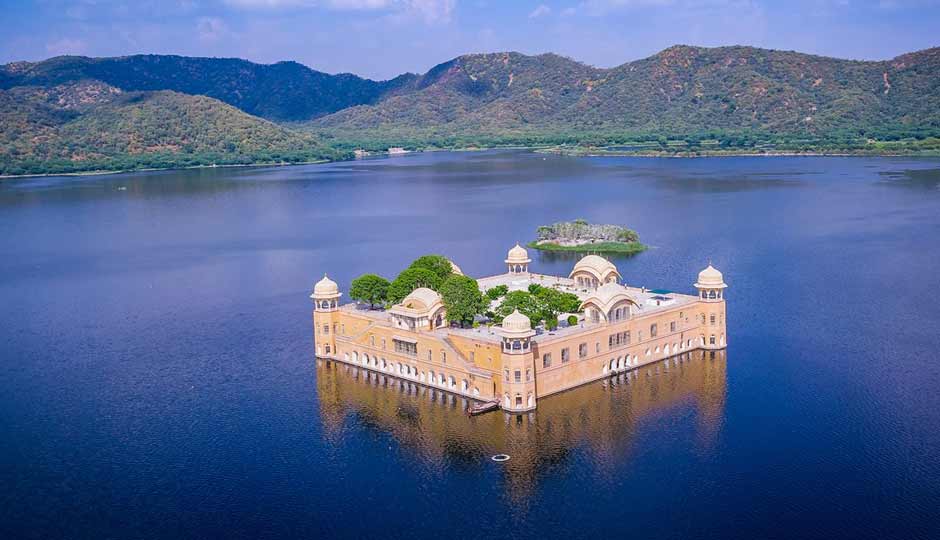
Located in the middle of the picturesque Man Sagar Lake, Jal Mahal is one of Jaipur’s most enchanting architectural landmarks. The palace appears to float on the surface of the lake, creating a spectacular sight, particularly during sunrise and sunset.
The lake and surrounding water system were developed as part of efforts to conserve water in the region. The palace was later built as a royal retreat and hunting lodge and underwent modifications during the reign of Maharaja Madho Singh I.
Constructed primarily from red sandstone, Jal Mahal features a five-storey structure, although only the upper floor is generally visible above the water when the lake is full. Its unique setting, traditional architecture and peaceful surroundings make it a popular attraction for visitors exploring Jaipur.
5. Sisodia Rani Garden
Situated around 10 kilometres from Jaipur, Sisodia Rani Garden is a beautifully landscaped garden known for its artistic design, fountains, terraces and historic charm. The garden was commissioned by Maharaja Sawai Jai Singh II in the 18th century for his wife, Sisodia Rani.
Spread across multiple levels, the garden features lush greenery, ornamental fountains, pavilions and beautifully decorated walls depicting scenes from the life of Lord Krishna. Its symmetrical layout and serene surroundings make it an appealing destination for visitors looking for a peaceful escape from the busy streets of Jaipur.
The garden is also associated with the royal love story of Sawai Jai Singh II and Sisodia Rani, adding a romantic dimension to its historical significance.
6. Jantar Mantar
Located next to the City Palace, Jantar Mantar is one of Jaipur’s most remarkable scientific and architectural landmarks. It was commissioned by Maharaja Sawai Jai Singh II in the early 18th century and is recognised as a UNESCO World Heritage Site.
The observatory features a collection of large-scale astronomical instruments designed to measure time, observe celestial bodies and calculate various astronomical positions. The site contains 14 major geometric instruments, each created for a specific astronomical purpose.
One of its most prominent structures is the Samrat Yantra, a massive sundial capable of measuring local time with remarkable precision. Other important instruments include the Ram Yantra, Jai Prakash Yantra and Dhruva Yantra.
Jantar Mantar beautifully demonstrates how traditional architecture, mathematics and astronomy came together during the reign of Sawai Jai Singh II.
7. Albert Hall Museum
The Albert Hall Museum is one of Rajasthan’s oldest and most prominent museums. Located in the Ram Niwas Garden, the magnificent building was designed by architect Sir Samuel Swinton Jacob and officially opened as a public museum in 1887.
The Albert Hall Museum is admired not only for its fascinating collections but also for its impressive Indo-Saracenic architectural style. The museum houses an extensive collection of artefacts, including paintings, sculptures, coins, textiles, decorative arts and traditional crafts.
Visitors can explore exhibits that provide insights into Rajasthan’s rich cultural heritage and artistic traditions. The museum’s grand architecture and beautifully illuminated exterior also make it a popular spot for photography enthusiasts.
8. Nahargarh Fort
Perched high in the Aravalli Hills, Nahargarh Fort offers some of the most spectacular panoramic views of Jaipur. The fort was commissioned by Maharaja Sawai Jai Singh II in the 18th century and formed an important part of Jaipur’s defensive network, along with Amer Fort and Jaigarh Fort.
The fort combines historical significance with striking architecture and scenic surroundings. One of its notable structures is Diwan-i-Aam, an open-air hall where the ruler would meet members of the public and listen to their concerns.
Nahargarh Fort is particularly popular among visitors for its elevated location and sweeping views over Jaipur. Its historic buildings, courtyards and scenic landscape make it a memorable destination for history and photography enthusiasts.
9. Jaigarh Fort
Built to strengthen the defence of Amber, Jaigarh Fort is a massive hilltop fort located in the Aravalli range. Commissioned by Maharaja Sawai Jai Singh II, the fort was strategically positioned overlooking the Amber Fort and surrounding landscape.
Unlike many royal residences, Jaigarh was primarily designed as a military stronghold. Its massive walls, watchtowers, water reservoirs and defensive structures reflect its strategic importance.
One of the fort’s biggest attractions is Jaivana, a massive cannon mounted on wheels and traditionally regarded as one of the largest wheeled cannons of its era. The fort also houses an armoury and museum displaying an assortment of weapons and historical objects, including swords, shields, muskets, cannonballs and other military equipment.
Visitors can also explore displays featuring photographs, royal processions, portraits and other glimpses into Jaipur’s royal heritage.
10. Birla Temple
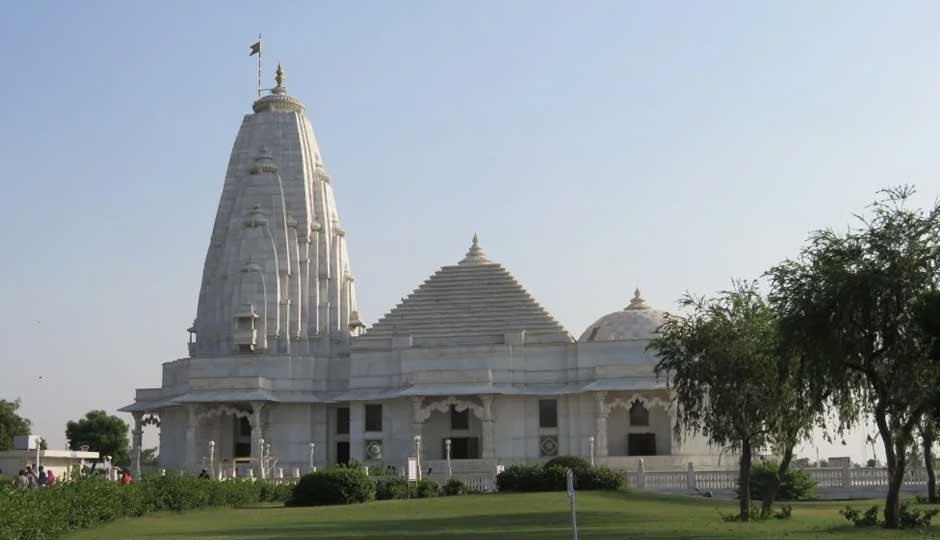
The Birla Temple, officially known as Lakshmi Narayan Temple, is a prominent religious and architectural landmark in Jaipur. Located at the foot of Moti Dungari Hill, the temple is dedicated to Lord Vishnu and Goddess Lakshmi.
Built primarily from gleaming white marble, the temple features intricately carved pillars, sculptures and decorative motifs. The elegant architecture creates a striking contrast against the surrounding landscape, particularly when the temple is illuminated at night.
Inside the Birla Temple, visitors can admire beautifully carved images of Lord Vishnu and Goddess Lakshmi along with representations of Hindu religious traditions. The walls and interiors also feature inscriptions and references inspired by Hindu scriptures and philosophical teachings.
The temple’s blend of contemporary design and traditional Indian craftsmanship makes it an important attraction for both devotees and tourists. Its peaceful atmosphere, artistic details and impressive white-marble architecture make it a popular stop while exploring Jaipur.