11 Fascinating Facts About Jammu & Kashmir That Will Leave You Amazed
By: Priyanka Maheshwari Wed, 30 Sep 2026 10:09:41
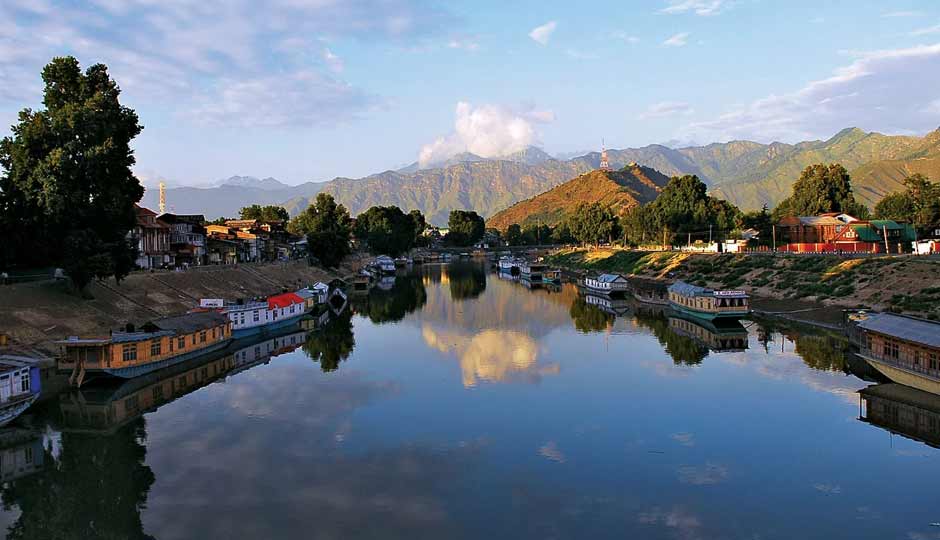
Surrounded by mist-covered mountains, dense pine and deodar forests, crystal-clear lakes and breathtaking valleys, Jammu & Kashmir has long been celebrated for its extraordinary natural beauty. The landscape seems almost dreamlike, with snow-covered peaks rising against the sky, colourful shikaras gliding across tranquil waters and the cool mountain breeze carrying the fragrance of the forests.
As you explore this enchanting region, it is easy to understand why Kashmir has traditionally been described as “paradise on earth.” Beyond its landscapes, however, Jammu & Kashmir has a fascinating history, diverse culture, distinctive traditions and remarkable geographical features.
Here are some interesting facts about Jammu & Kashmir that reveal the many layers of this beautiful Himalayan region.
# Jammu & Kashmir Fact Number 1: Maharaja Hari Singh
Maharaja Hari Singh was the last ruling Maharaja of the princely state of Jammu and Kashmir and belonged to the Dogra dynasty. His reign coincided with one of the most turbulent periods in the region's modern history.
During his rule, Sheikh Abdullah emerged as an influential political leader, while different sections of the population expressed different political aspirations. Maharaja Hari Singh initially sought to maintain the independence of Jammu and Kashmir rather than immediately joining either India or Pakistan.
The situation changed dramatically in 1947 when tribal forces entered the region from Pakistan. Maharaja Hari Singh subsequently signed the Instrument of Accession to India, after which Indian troops were sent to the region.
The events surrounding 1947 left a deep and complicated imprint on the history of Jammu & Kashmir and continue to shape discussions about the region.
# Jammu & Kashmir Fact Number 2: Kashmiriyat
One of the most distinctive aspects of the region is Kashmiriyat, a term commonly used to describe the shared cultural identity and traditions of the people of Kashmir.
Kashmiriyat has historically been associated with influences from Hinduism, Islam, Buddhism and Sikhism, as well as traditions such as Kashmiri Shaivism and Sufi thought. The idea emphasises social harmony, cultural coexistence and a shared Kashmiri identity that can transcend religious differences.
The cultural landscape of the wider region has also been shaped by its location along historic trade and cultural routes. Srinagar, one of the region's most important cities, has a long history extending back to ancient times.
The spiritual traditions of Kashmir include the teachings of Kashmiri Shaivism, Sufi saints and Buddhist traditions that remain particularly significant in Ladakh.
# Jammu & Kashmir Fact Number 3: Pir Panjal Railway Tunnel
Jammu & Kashmir is home to one of India's remarkable railway engineering projects, the Pir Panjal Railway Tunnel, also known as the Banihal railway tunnel.
The tunnel is approximately 11.2 kilometres long and forms an important part of the railway connection through the Pir Panjal mountain range. It enables trains to pass through challenging Himalayan terrain and provides an important transport link between different parts of the region.
Travelling through the tunnel offers a striking contrast to the spectacular mountain scenery outside. The railway has made travel through this mountainous region considerably more accessible.
And once you emerge from the mountains, the iconic shikaras floating across Kashmir's lakes offer another quintessential Himalayan experience.
# Jammu & Kashmir Fact Number 4: Four Distinct Seasons
Jammu & Kashmir experiences dramatic seasonal changes, with spring, summer, autumn and winter each bringing a different character to the landscape.
Spring brings blooming flowers and fresh greenery, while summers offer pleasant weather in many parts of the Kashmir Valley. Autumn transforms the landscape with golden and reddish hues, while winter covers many higher areas in snow.
The region also has a distinctive cultural identity reflected in traditional clothing and objects. The pheran, a traditional loose-fitting garment, is closely associated with Kashmiri culture. The samovar is a traditional metal vessel used for preparing tea, while the kangri is a traditional fire pot carried under the pheran to provide warmth during the cold months.
Kashmiri is one of the region's important languages, while traditional handicrafts, carpets, embroidery and woodwork further showcase its cultural richness. Shikaras are another iconic symbol of Kashmir.
# Jammu & Kashmir Fact Number 5: Kalhana and Rajatarangini
Jammu & Kashmir has a remarkable literary and historical heritage. One of its most celebrated figures is Kalhana, the 12th-century Kashmiri historian and author of Rajatarangini.
Written in Sanskrit, Rajatarangini, meaning “River of Kings,” provides a detailed account of the history of Kashmir's rulers. Kalhana is widely remembered as one of the earliest important chroniclers of Kashmir's history.
The region has also produced influential spiritual and literary figures. Lalleshwari, popularly known as Lal Ded, is remembered for her mystical poetry and spiritual teachings. Nund Rishi, also known as Sheikh Noor-ud-din Noorani, was another influential Kashmiri spiritual figure associated with the region's Sufi and Rishi traditions.
In modern literature, poet Agha Shahid Ali gained international recognition for his evocative writing about Kashmir, exile, memory and displacement.
# Jammu & Kashmir Fact Number 6: A Region of Many Languages
Jammu & Kashmir is linguistically diverse, reflecting its long history and multicultural population.
Kashmiri, Dogri, Urdu, Gojri, Ladakhi, Balti, Shina and Pashto, among other languages, are spoken across different parts of the region.
The distribution of languages varies geographically. Kashmiri is widely spoken in the Kashmir Valley, Dogri has a strong presence in the Jammu region, while languages such as Ladakhi, Balti and Shina are associated with different areas of the Himalayan region.
This linguistic diversity reflects centuries of cultural interaction, migration, trade and political changes. It is one of the features that makes the region particularly distinctive.
# Jammu & Kashmir Fact Number 7: Drass and Its Extreme Winters
Jammu & Kashmir has some of the most extreme climatic conditions in the Indian Himalayas. Drass, located in the Kargil region, is famous for its exceptionally cold winters and is often described as one of the coldest inhabited places in the world.
Temperatures in Drass can fall dramatically during winter, occasionally dropping to around -40°C or below under severe conditions.
The region is also geographically strategic because of its mountain passes. Zoji La is one of the most important passes, connecting the Kashmir Valley with Ladakh. Historically and strategically, mountain passes such as Zoji La have played a significant role in movement and transportation across the Himalayas.
# Jammu & Kashmir Fact Number 8: Wazwan, Saffron and Floating Markets
If there is one culinary tradition that deserves special mention, it is Wazwan. This elaborate Kashmiri culinary tradition consists of multiple meat-based preparations and is traditionally associated with important celebrations and gatherings.
Wazwan is more than just a meal; it is an important part of Kashmiri hospitality and cultural identity.
Kashmir is also famous for saffron cultivation, particularly in the Pampore region. Kashmiri saffron is prized for its distinctive aroma, colour and flavour.
Another fascinating attraction is the floating market experience on Dal Lake, where sellers and buyers conduct business from boats. The sight of colourful shikaras and floating boats against the backdrop of the surrounding mountains is one of Kashmir's most recognisable scenes.
# Jammu & Kashmir Fact Number 9: The Iconic Shikara
No visit to Kashmir feels complete without experiencing a shikara ride. These traditional wooden boats have become one of the defining symbols of the Kashmir Valley.
Shikaras are particularly associated with Dal Lake in Srinagar, where they are used for sightseeing, transportation, fishing and trading. Visitors can also experience stays on traditional houseboats while exploring the waterways.
Kashmir's beauty has inspired countless writers and artists. Salman Rushdie's Midnight's Children, for instance, includes memorable references to Kashmir and its people.
Some of the region's best-known tourist destinations include Srinagar, Gulmarg, Pahalgam and Sonamarg, each offering a different experience of the Himalayan landscape.
The ruins of the ancient Martand Sun Temple near Anantnag are another important historical attraction, reflecting Kashmir's rich architectural heritage.
# Jammu & Kashmir Fact Number 10: The Mughals and Kashmir
The breathtaking landscapes of Kashmir captivated several Mughal rulers, who developed magnificent gardens in the region.
Among the best-known examples is Chashme Shahi, a Mughal garden in Srinagar established during the reign of Shah Jahan. The garden is famous for its natural spring and terraced layout.
Another important religious landmark is the Hazratbal Shrine, located on the banks of Dal Lake. It is revered by Muslims and is traditionally associated with a sacred relic believed to be a strand of hair of Prophet Muhammad.
Kashmir is also home to Wular Lake, one of the largest freshwater lakes in Asia. Its expansive waters and surrounding landscapes make it an important geographical feature of the region.
The Chenab Rail Bridge, located in Jammu and Kashmir, is another remarkable feat of modern engineering. Built high above the Chenab River, it forms part of the railway network connecting the region with the rest of India.
# Jammu & Kashmir Fact Number 11: Gulmarg Gondola and Other Remarkable Attractions
The Gulmarg Gondola is one of the most famous cable-car systems in India and is a major attraction for visitors to Gulmarg. It takes passengers towards the higher reaches of the surrounding mountains, offering spectacular views of the Himalayan landscape.
Another spectacular attraction is the Indira Gandhi Memorial Tulip Garden in Srinagar. Spread across a large area overlooking Dal Lake, the garden becomes particularly vibrant during the annual tulip season.
Jammu also has a rich collection of historical manuscripts. The Raghunath Temple complex has long been associated with an important collection of Sanskrit and other Indian-language manuscripts.
The region is also famous for its wildlife. The hangul, or Kashmir stag, is one of the most iconic animals associated with the Kashmir Valley.
Kashmir is equally renowned for its pashmina wool, traditionally obtained from the fine undercoat of Himalayan goats. Pashmina shawls are among the region's most famous traditional handicrafts.
Another major engineering landmark is the Chenani-Nashri Tunnel, now known as the Dr Syama Prasad Mookerjee Tunnel. The approximately 9-kilometre-long road tunnel significantly reduces travel time between Jammu and Srinagar by providing an alternative route through the mountains.
# Jammu & Kashmir: A Land of History, Culture and Natural Beauty
From snow-covered Himalayan peaks and serene lakes to ancient temples, Mughal gardens, Sufi traditions, exquisite handicrafts and distinctive cuisine, Jammu & Kashmir offers an extraordinary blend of nature and culture.
Its history is complex, its traditions are diverse and its landscapes are unforgettable. Whether you are exploring Srinagar's waterways, witnessing the snow in Gulmarg, travelling through the mountains towards Ladakh or discovering the region's historic monuments, Jammu & Kashmir offers experiences that remain etched in memory.
It is this remarkable combination of natural beauty, cultural diversity, history and tradition that has earned Kashmir its enduring reputation as one of the most captivating destinations in the Himalayas.