4 Most Sacred Pilgrimage Sites In The 4 Corners Of India
By: Mansi Wed, 20 Aug 2025 10:38:43
Char Dham of India – A Sacred Pilgrimage of Spiritual Unity
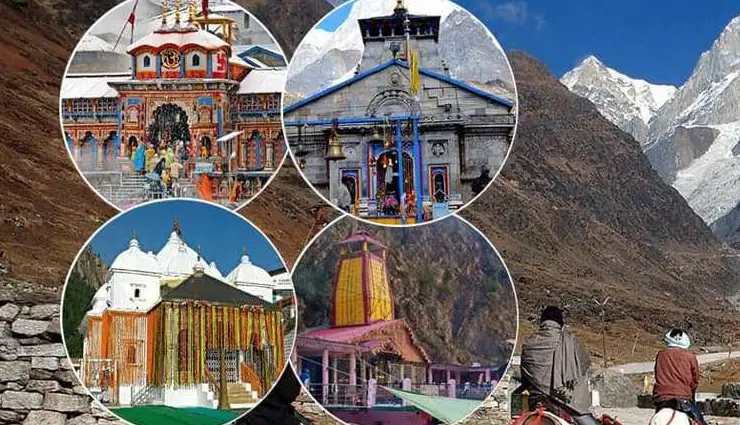
The Char Dham in India represents one of the most sacred pilgrimages in Hinduism, symbolizing the journey toward spiritual enlightenment. These four revered sites—Badrinath in the north, Dwarka in the west, Jagannath Puri in the east, and Rameshwaram in the south—are each dedicated to significant deities: Lord Vishnu, Lord Krishna, Lord Jagannath, and Lord Shiva respectively. Together, they form the Char Dham, reflecting not only India’s spiritual essence but also its geographic and cultural unity.
What Are the Char Dham?
The concept of Char Dham was popularized by Adi Shankaracharya, an 8th-century philosopher and theologian who played a key role in reviving Hinduism. He established four major Shankaracharya Peeths (monastic centers) in these four sacred destinations:
- Badrinath (North) – Badrika Ashram
- Dwarka (West) – Sharada Matha
- Puri (East) – Govardhan Matha
- Sringeri (South) – Sharada Peetham (Note: While Rameshwaram is part of the Char Dham pilgrimage, Sringeri was a Matha established by Shankaracharya in the south.)
It is also believed that wherever Lord Vishnu resides, Lord Shiva resides nearby:
- Kedarnath (Shiva) complements Badrinath (Vishnu)
- Somnath (Shiva) complements Dwarka (Krishna)
- Rameshwaram (Shiva) complements Ramasetu, related to Lord Rama (Vishnu)
- Lingaraja Temple complements Jagannath Puri
Char Dham and the Four Yugas
Each Dham holds spiritual significance tied to the four Yugas (epochs) in Hindu belief:
- Badrinath – Prominent in Satya Yuga
- Rameshwaram – Revered in Treta Yuga
- Dwarka – Associated with Dvapara Yuga
- Puri – Gained prominence in Kali Yuga
Chota Char Dham – The Himalayan Circuit
Apart from the major Char Dham, there is a Chota Char Dham in Uttarakhand, comprising:
Yamunotri
Gangotri
Kedarnath
Badrinath
These sites are open only during summer months due to heavy snowfall in winters.
Where Are the Char Dham Located?
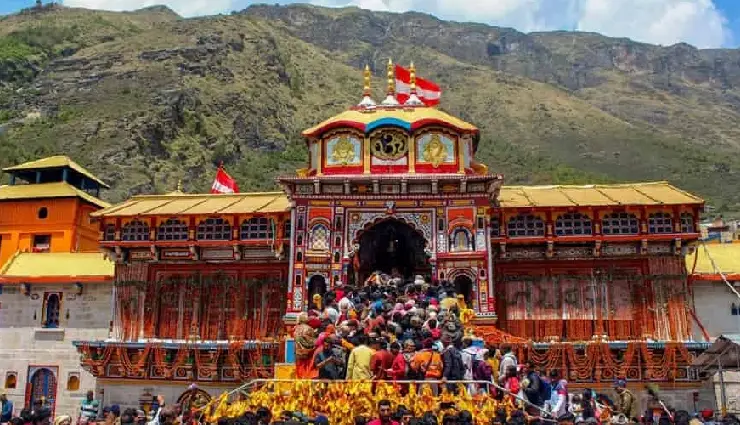
- Badrinath (North) – Located in Chamoli District, Uttarakhand, on the banks of the Alaknanda River.
- Dwarka (West) – In Gujarat, where the Gomti River meets the Arabian Sea.
- Rameshwaram (South) – In Tamil Nadu, on the Gulf of Mannar at the southern tip of India.
- Puri (East) – In Odisha, along the Bay of Bengal coastline.
Detailed Descriptions of Each Dham
1. Badrinath Dham
Nestled between the Nar and Narayan ranges and beneath the towering Neelkanth peak (6,560 m), Badrinath is a seat of Lord Vishnu. It is accessible from April to October and remains closed in winters.
Nearby attractions include:
Mana village, Vyas Gufa, Maatamoorti, Charanpaduka, Bheemkund, and the source of the Saraswati River.
Legend: Lord Vishnu is believed to have meditated here, with Goddess Lakshmi providing him shade in the form of a Badri (berry) tree, hence the name Badrinath.
2. Dwarka Dham
Dwarka, derived from the word “Dvar” (gate), lies at the confluence of the Gomti River and the Arabian Sea. It is said to be the ancient kingdom of Lord Krishna.
Legend: After defeating his tyrant uncle Kansa in Mathura, Krishna is believed to have relocated to Dwarka and reclaimed land from the sea to build his city. The current city is believed to be the seventh incarnation of Dwarka, as earlier cities were submerged.
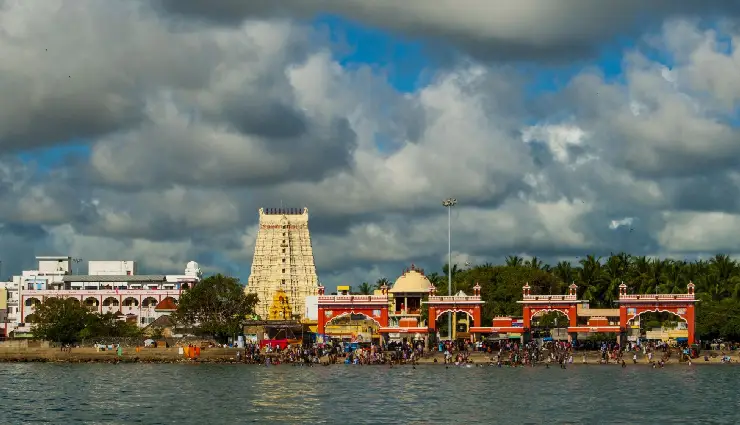
3. Rameshwaram Dham
Rameshwaram is the southernmost Dham and holds immense importance in the Ramayana. It is the site where Lord Rama built the Rama Setu bridge to rescue Sita from Lanka.
The Ramanathaswamy Temple is dedicated to Lord Shiva, in the form of a lingam called Sri Ramanatha Swamy, one of the 12 Jyotirlingas.
Legend: Rama worshipped Shiva here to absolve the sin of killing Ravana. Since Hanuman was delayed in fetching a lingam from the Himalayas, Rama made one from sand, which is now enshrined in the temple.
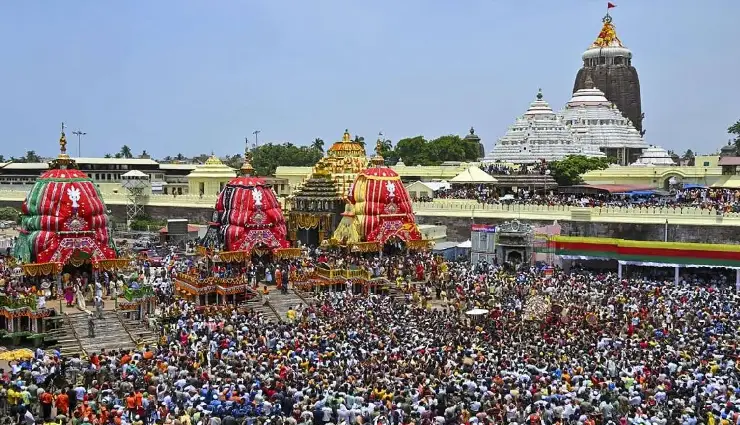
4. Puri Dham
Located in Puri, Odisha, the temple is dedicated to Lord Jagannath, a form of Krishna, and is unique in worshipping Subhadra (Krishna’s sister) and Balabhadra (Krishna’s brother).
Rath Yatra, a grand chariot festival, is celebrated here annually.
Legend: In Dvapara Yuga, King Indradyumna was instructed by Lord Vishnu to find a divine log floating on the sea to carve the deities. Vishnu, disguised as a carpenter, made the idols, but due to premature interruption by the queen, the idols remained unfinished and handless—yet are believed to embody the full divine power.
Who Established the Char Dham?
Adi Shankaracharya, the revered Hindu philosopher, is credited with organizing the Char Dham pilgrimage and establishing the four Shankaracharya Peeths. His goal was to unify Hindu practices and spiritual learning across India. Among the four Dhams:
Three are Vaishnava (Puri, Dwarka, Badrinath)
One is Shaiva (Rameshwaram)
Suggested Route for the Char Dham Yatra
To complete the Char Dham Yatra efficiently, one may follow this order:
# Badrinath (North)
Reach Rishikesh (via air, train, or road)
Proceed to Badrinath via Joshimath
After darshan, return to Rishikesh and then to Haridwar
# Dwarka (West)
From Haridwar, travel via train to Dwarka, Gujarat
Visit the temple and nearby attractions
# Puri (East)
Board a train to Puri, Odisha
Explore the Jagannath Temple and surroundings
# Rameshwaram (South)
From Puri, travel by train to Rameshwaram, Tamil Nadu
Conclude the pilgrimage at Ramanathaswamy Temple
The entire journey may take about two weeks or more, depending on the mode of travel and time spent at each destination.