5 Must Visit Temples In Coorg
By: Priyanka Maheshwari Sat, 14 Feb 2026 8:04:11
Nestled in the lush folds of the Western Ghats, Coorg—also known as Kodagu—rests peacefully amid mist-covered hills, dense forests, and a slow-paced rural charm. While most travellers are drawn to its sprawling coffee estates and cascading waterfalls, the region’s spiritual essence often goes unnoticed. Coorg is home to several temples and monasteries that beautifully showcase its layered history, rich culture, mythology, and enduring community traditions.
If you’re seeking a tranquil retreat, a culturally immersive journey, or a deeper understanding of Coorg beyond its postcard-perfect landscapes, these five must-visit spiritual sites offer the perfect beginning. Each destination blends serenity, striking architecture, and compelling stories that connect you to the heritage of Kodagu.
# Namdroling Monastery (Golden Temple)
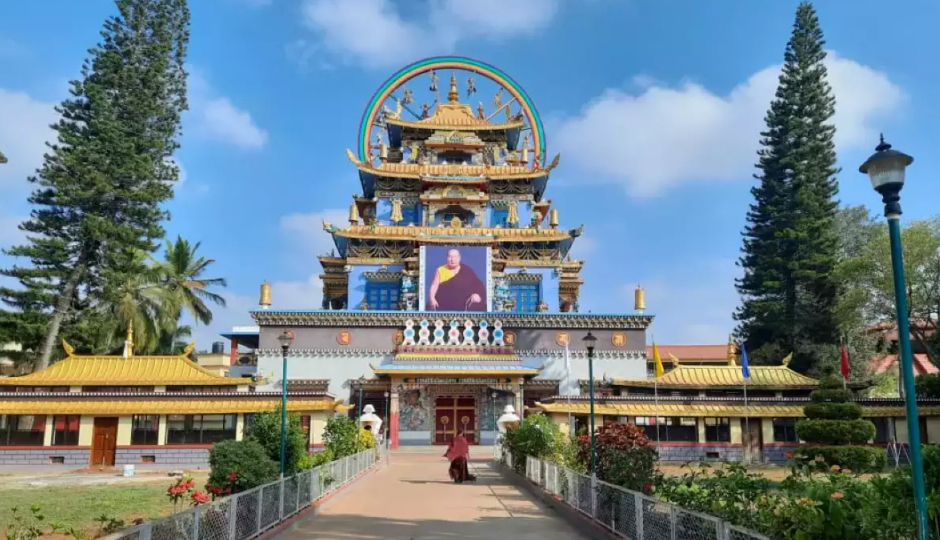
Just beyond Coorg’s bustling tourist circuit lies Bylakuppe, one of India’s largest Tibetan settlements. Amid stretches of green fields and tall eucalyptus trees stands the Namdroling Nyingmapa Monastery, widely known as the Golden Temple. Its nickname comes from the awe-inspiring golden statues of Buddha Shakyamuni, Guru Padmasambhava and Buddha Amitayus that tower over the main prayer hall.
Why It Deserves a Spot on Your Coorg Itinerary
People visit for many reasons, but what lingers is the sense of calm. As you pass through the entrance, the breeze of Coorg blends with the gentle murmur of prayer chants. The monastery complex is expansive and well-kept, framed by manicured gardens. Vivid murals, intricate carvings, shimmering golden rooftops and traditional Tibetan motifs make the architecture both vibrant and deeply spiritual.
# Omkareshwara Temple
Located in the heart of Madikeri, Omkareshwara Temple is dedicated to Lord Shiva and is instantly recognisable for its unusual design. Built in 1820 by King Lingarajendra II, the temple blends Gothic, Islamic and traditional Indian architectural styles. Its square layout, prominent central dome and four turret-like minarets give it a look that differs from typical South Indian temples.
What Makes It Unique
Beyond being a sacred space, the temple stands as a reminder of Coorg’s layered cultural history. It is believed that the king built it as an act of penance, and its hybrid design reflects diverse influences.
At the centre of the complex lies the Kalyani, a large water tank with a small mandapa in the middle. During sunrise and sunset, the temple’s reflection in the water creates a serene and almost poetic atmosphere.
# Talakaveri Temple
For a combination of nature, legend and devotion, Talakaveri stands unmatched in Coorg. Situated high in the Brahmagiri Hills at about 1,276 metres above sea level, this temple marks the origin of the sacred River Kaveri—one of South India’s most revered rivers. The drive itself is scenic, winding through mist-covered hills and forested slopes.
Spiritual Significance
Talakaveri is considered the birthplace of the River Kaveri. According to mythology, Goddess Kaveriamma manifested here as a small spring, giving life to the river. Even today, pilgrims regard the spot as deeply sacred.
During Tula Sankramana in October, thousands gather to witness the holy spring’s waters rise mysteriously—an occurrence seen as a divine blessing.
# Sri Bhagandeshwara Temple
A short journey from Talakaveri brings you to Bhagamandala, a sacred town where the rivers Kaveri, Sujyothi and Kanike converge. This meeting point, known as the Triveni Sangam, sets a spiritual tone even before you step into the temple grounds.
Dedicated to Lord Shiva, Sri Bhagandeshwara Temple reflects the traditional Kodagu–Karavali architectural style, featuring sloping tiled roofs and prominent wooden elements that blend harmoniously with the surroundings.
# Padi Igguthappa Temple
Among Coorg’s many sacred sites, Padi Igguthappa Temple holds a special place in the heart of the Kodava community. Located near Kakkabe, this temple feels more intimate and rooted in tradition. It is dedicated to Lord Igguthappa, believed to be an incarnation of Lord Subramanya and a deity linked to agriculture, rainfall and prosperity.
Deep Cultural Roots
For the Kodavas, Igguthappa is more than a deity—he is seen as the guardian of their ancestral lands. The temple becomes the focal point during the Puthari Festival, Coorg’s harvest celebration, when rituals, offerings and traditional dances bring the community together.
Built in a style reminiscent of old Kerala temples, with wooden details and sloping tiled roofs, the temple sits quietly amid hills and greenery. Its simplicity and natural setting add to its timeless charm.