
8 Famous Stepwells To Visit In Gujarat
By: Priyanka Maheshwari Sun, 06 Sep 2026 10:54:45
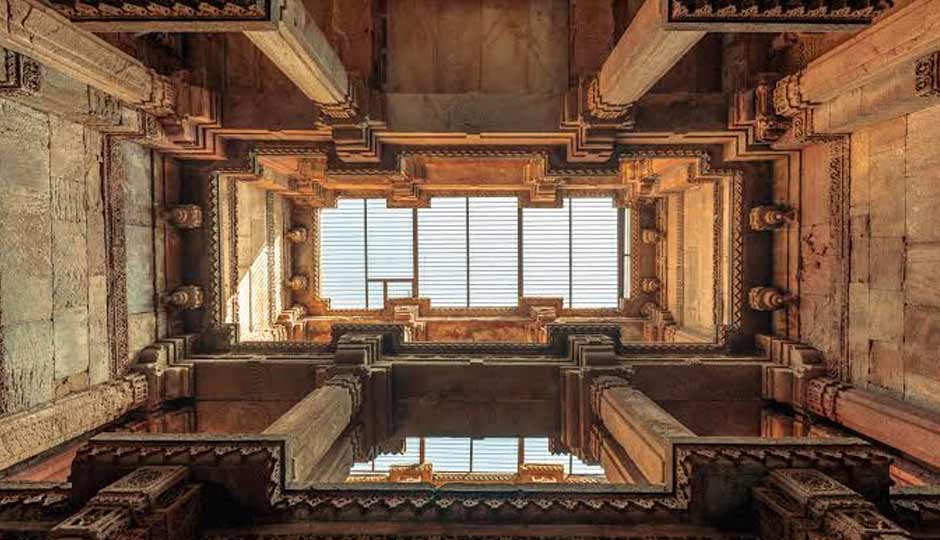
Gujarat is widely known for the shimmering white expanse of the Rann of Kutch, the majestic Asiatic lions of Gir National Park, the sacred temples of Dwarka and Somnath, and its vibrant handicraft traditions. But beyond its bustling cities, ancient forts and historic towns lies another extraordinary chapter of Gujarat’s heritage—the state’s magnificent stepwells.
Locally called vavs, these remarkable structures were never merely places to collect water. They served as sophisticated water-management systems, cool shelters for travellers, social gathering spaces and, above all, stunning examples of architectural craftsmanship.
Walking into a stepwell today offers an experience unlike visiting a conventional monument. Instead of ascending towards a palace or temple, you gradually descend into the earth. With every step, the sunlight becomes softer, the temperature drops, and rows of pillars, arches and intricate carvings begin to emerge from the shadows.
From the UNESCO World Heritage-listed Rani ki Vav in Patan to the fascinating rock-cut wells hidden within Junagadh’s Uparkot Fort, Gujarat is home to some of the most impressive examples of stepwell architecture in India.
If historic architecture is an important part of your western India journey, you can also explore Tusk Travel’s guide to the most famous stepwells in India or check out its Gujarat tour packages while planning a longer trip.
1. Rani ki Vav, Patan
If you can visit only one stepwell in Gujarat, Rani ki Vav should be at the top of your list.
Situated in Patan along the banks of the Saraswati River, Rani ki Vav is among India’s finest examples of underground architecture. Dating back to the 11th century, the monument was constructed as a memorial to a king and conceived almost like an inverted temple. Instead of moving upwards towards a shrine, visitors descend gradually towards the water.
The monument’s impressive scale becomes clear only once you step inside. Seven levels extend underground, connected by stairways and surrounded by pillared pavilions decorated with exceptionally detailed sculptures. UNESCO records more than 500 principal sculptures and over 1,000 smaller figures featuring religious, mythological and secular themes.
Rani ki Vav was inscribed on the UNESCO World Heritage List in 2014 and is undoubtedly the most renowned stepwell in Gujarat.
Take your time while exploring the sculptural panels instead of simply heading towards the bottom. Figures associated with Vishnu, celestial beings and intricate ornamental designs reveal the remarkable artistic sophistication of the period.
Patan is worth exploring beyond Rani ki Vav as well. Travellers interested in local culture and heritage can explore the best places to visit in Patan, including the city’s famous Patola weaving tradition.
Best for: Architecture, UNESCO heritage, sculpture and photography
Suggested time: 1–2 hours
Combine with: Patan and Modhera
2. Adalaj Stepwell, Near Ahmedabad
Few stepwells in Gujarat create an atmosphere quite like Adalaj ni Vav.
Located in Adalaj, just north of Ahmedabad, this magnificent late-15th-century stepwell is renowned for its intricately carved pillars, balconies, geometric patterns and fascinating blend of architectural influences.
One of its most distinctive features is its three-sided entrance arrangement. Stairways descend from three different directions before converging at a lower level. As you make your way down, sunlight filters through openings above, highlighting some carvings while leaving others partially hidden in shadow.
The changing atmosphere is an important part of the experience. Stepwells were carefully designed to provide access to water while also creating cooler underground spaces. Adalaj therefore offers welcome relief after the heat and bustle of Ahmedabad.
Take a closer look at the pillars, galleries and stone surfaces. Floral motifs, symbolic designs and elaborate carvings demonstrate how engineering and artistic expression came together in Gujarat’s traditional water architecture.
Its location close to Ahmedabad also makes Adalaj one of the easiest stepwells to include in a Gujarat itinerary. You can comfortably combine it with Ahmedabad’s old city, Sabarmati Ashram and other heritage attractions.
For more experiences in the city, check out Tusk Travel’s guide to things to do in Ahmedabad.
Best for: First-time visitors, architecture and photography
Suggested time: 45–60 minutes
Combine with: Ahmedabad and Gandhinagar
3. Dada Harir Vav, Ahmedabad
For travellers who prefer lesser-known heritage attractions, Dada Harir Vav, also known as Bai Harir ni Vav, is well worth visiting.
Situated in Ahmedabad’s Asarwa area, this historic stepwell was constructed around 1499–1500 by Bai Harir Sultani, a prominent woman connected with the court of Sultan Mahmud Begada. Its history is documented through inscriptions written in both Sanskrit and Persian.
The stepwell descends through several levels supported by beautifully carved stone columns. Spiral staircases along the side walls lead visitors towards the lower platforms, while shifting sunlight creates a different visual character at each level.
Compared with the grandeur of Adalaj, Dada Harir feels more intimate. Its carvings may not be as monumental as those at Rani ki Vav, but the combination of sandstone architecture, deep shadows, pillars and enclosed spaces makes it an atmospheric place to explore.
Look carefully at the floral and geometric motifs and observe how the network of columns supports the underground structure.
Dada Harir is also a rewarding stop for visitors who want to experience a side of Ahmedabad that extends beyond its most famous landmarks.
Best for: Lesser-known heritage, architecture and quiet photography
Suggested time: 30–45 minutes
Combine with: Mata Bhavani Vav and Ahmedabad Old City
4. Mata Bhavani Vav, Ahmedabad
A short distance from Dada Harir lies another important piece of Ahmedabad’s water-architecture heritage: Mata Bhavani Vav.
According to Ahmedabad’s official heritage information, it is regarded as the oldest surviving stepwell in the city and dates back to the 11th-century Solanki period.
Its design is noticeably different from the later stepwells constructed during the Sultanate period.
A long staircase leads down through three storeys, while open pavilions are arranged along an east-west axis. Carved pillars, brackets and beams demonstrate that even early stepwells were conceived as architectural spaces rather than simply functional water-storage structures.
The stepwell takes its present name from a later shrine dedicated to Mata Bhavani, which continues to attract devotees.
Visiting Mata Bhavani Vav along with Dada Harir provides an interesting opportunity to compare two monuments created centuries apart. Together, they offer a glimpse into the evolution of Gujarat’s distinctive stepwell tradition.
Best for: Architectural history and repeat visitors to Ahmedabad
Suggested time: Around 30 minutes
Combine with: Dada Harir Vav
5. Amritvarshini Vav, Ahmedabad
One of Ahmedabad’s most unusual historic stepwells is tucked away in the middle of the city’s bustling urban landscape.
Known as Amritvarshini Vav, and sometimes referred to as Panchkuva Stepwell or Katkhuni Vav, it is located within Ahmedabad’s historic walled city.
Dating to around 1723, the stepwell stands out because of its unusual L-shaped design. Mughal-style arches form part of the structure, while three flights of stairs lead down towards the water, more than 50 feet below ground.
Its urban setting is part of what makes Amritvarshini Vav so intriguing. Rather than standing alone as an archaeological monument, it remains closely connected to the everyday surroundings of Ahmedabad.
For travellers interested in architectural history, the stepwell offers an opportunity to see how Gujarat’s water structures continued to evolve long after the celebrated Solanki-era monuments were built.
It is considerably less famous internationally than Rani ki Vav or Adalaj, making it a rewarding choice for those looking to explore Ahmedabad’s lesser-known heritage.
Best for: Hidden heritage and unusual architecture
Suggested time: 20–30 minutes
Combine with: Ahmedabad heritage walk and old city markets
6. Adi-Kadi Vav, Junagadh
Travel southwest towards Junagadh and Gujarat’s stepwell architecture takes on a dramatically different appearance.
Located inside the historic Uparkot Fort, Adi-Kadi Vav looks less like a traditional pavilion-style stepwell and more like a staircase carved directly into the surrounding rock.
Gujarat Tourism describes this 15th-century structure as having been carved entirely from hard rock. Approximately 120 narrow steps descend deep into the stone towards the well shaft.
Its construction technique is what makes Adi-Kadi Vav particularly fascinating. Rather than assembling the structure with separate blocks, columns and walls, builders carved the water system directly into the existing rock.
Several local legends are associated with the well, adding an element of mystery to the site. However, these stories are best understood as folklore rather than established historical accounts.
Descending the narrow staircase gives Adi-Kadi Vav a rugged and almost archaeological atmosphere—very different from the ornate and highly decorated stepwells of Patan and Ahmedabad.
Best for: Rock-cut architecture and offbeat history
Suggested time: Around 30 minutes
Combine with: Uparkot Fort and Navghan Kuvo
7. Navghan Kuvo, Junagadh
Another remarkable water structure lies within Uparkot Fort: Navghan Kuvo.
Traditionally dated to around 1026 CE, the well may be considerably older according to some accounts cited by Gujarat Tourism. Its defining feature is the staircase that spirals around the well shaft, descending approximately 52 metres towards the water.
Navghan Kuvo also had an important strategic role. Its dependable water supply helped Uparkot Fort withstand prolonged periods of siege.
Unlike Rani ki Vav, where symmetry, sculpture and ornamentation dominate the experience, Navghan Kuvo draws its impact from depth, raw rock surfaces and the unusual spiral descent.
Visiting Navghan Kuvo and Adi-Kadi Vav together is highly recommended. Although they are located close to one another, their contrasting designs demonstrate how Gujarat’s builders adapted water systems to the local geology, defensive requirements and available construction methods.
Best for: Engineering, fort architecture and history
Suggested time: 30–45 minutes
Combine with: Adi-Kadi Vav, Uparkot Fort and Junagadh
8. Helical Stepwell, Champaner
One of the most unusual structures on this list is the Helical Stepwell at Champaner.
Unlike the long, straight staircases found in many Gujarati vavs, this stepwell features a staircase that follows a circular path around the well shaft.
The structure forms part of the larger Champaner-Pavagadh Archaeological Park, a UNESCO World Heritage Site known for its fortifications, temples, mosques, historic settlements and sophisticated water-management systems.
Its spiral geometry makes the Helical Stepwell particularly appealing to architecture enthusiasts and photographers looking for something different.
However, Champaner should not be treated as a quick stop just to see the stepwell. The archaeological park deserves several hours of exploration. Highlights include Jami Masjid, historic gateways, fortifications and the landscape surrounding Pavagadh Hill.
If you are interested in exploring Gujarat’s UNESCO heritage, you can also read Tusk Travel’s guide to the UNESCO World Heritage Sites in Gujarat.
Best for: Unusual design, photography and archaeology
Suggested time: Around 30 minutes for the stepwell; several hours for Champaner
Combine with: Champaner-Pavagadh and Vadodara