Major History About Brihadeeswarar Temple Tanjore And Nearby Places To Visit
By: Priyanka Maheshwari Tue, 07 Jul 2026 10:42:20
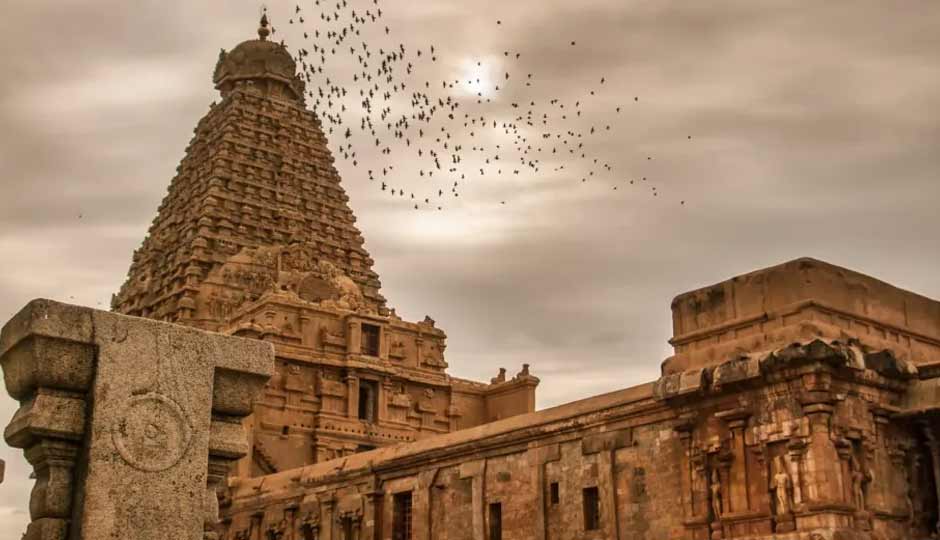
The Brihadeeswarar Temple, popularly known as the Thanjavur Big Temple or Tanjore Big Temple, stands as one of India's most magnificent architectural and cultural treasures. Located in the historic city of Thanjavur in Tamil Nadu, this majestic temple dedicated to Lord Shiva is celebrated for its colossal scale, intricate stone carvings, remarkable Chola craftsmanship, and deeply spiritual ambience.
Built over a millennium ago, the temple continues to serve as both a revered place of worship and a UNESCO World Heritage Site. Rather than being a relic of the past, it remains a vibrant religious centre where priests perform daily rituals, devotees gather for darshan, colourful festivals are celebrated throughout the year, and visitors from across the world admire its timeless beauty and engineering brilliance.
Whether you are planning a temple tour across Tamil Nadu, exploring South India's rich heritage, or enjoying a cultural getaway in Thanjavur, Brihadeeswarar Temple deserves a prominent place on your itinerary. This comprehensive travel guide covers everything you need to know, including the temple's history, architectural highlights, timings, entry information, best time to visit, travel tips, and nearby attractions.
About Brihadeeswarar Temple
Brihadeeswarar Temple is one of the most significant Hindu temples dedicated to Lord Shiva. It is widely known as the Big Temple because of its enormous granite complex, towering vimana, massive Nandi statue, and grand proportions. Over the centuries, the temple has also been referred to as Brihadisvara Temple, Peruvudaiyar Temple, Rajarajeswaram, and Tanjore Big Temple.
The temple was commissioned by the great Chola emperor Rajaraja Chola I and completed around 1010 CE. It was envisioned not only as a place of worship but also as a symbol of imperial power, artistic excellence, religious devotion, and architectural innovation.
Today, Brihadeeswarar Temple forms part of UNESCO's Great Living Chola Temples, alongside the Brihadisvara Temple at Gangaikondacholapuram and the Airavatesvara Temple at Darasuram. These monuments are described as "living" because they continue to function as active centres of worship, preserving centuries-old rituals, festivals, music, dance, and local traditions.
Recognised as one of the finest examples of Dravidian temple architecture, Brihadeeswarar Temple captivates visitors with its harmonious proportions, soaring central tower, detailed sculptures, ancient inscriptions, vibrant murals, and exceptional granite construction. It remains a must-visit destination for pilgrims, history enthusiasts, photographers, architecture lovers, and travellers exploring Tamil Nadu.
Brihadeeswarar Temple History
The history of Brihadeeswarar Temple is deeply intertwined with the rise of the mighty Chola Empire, one of the most influential dynasties in South Indian history. The Cholas ruled vast regions of present-day Tamil Nadu while extending their influence across Sri Lanka and maritime trade routes throughout Southeast Asia.
During the reign of Rajaraja Chola I in the late 10th and early 11th centuries, the Chola Empire flourished politically, economically, and culturally. His administration strengthened military power, expanded overseas trade, encouraged literature and music, promoted bronze sculpture, and supported the construction of magnificent temples.
As an expression of his devotion to Lord Shiva, Rajaraja Chola I commissioned the construction of Brihadeeswarar Temple between approximately 1003 and 1010 CE. The temple was completed in 1010 CE and is recognised by UNESCO as one of the earliest and greatest masterpieces of mature Chola architecture.
Originally known as Rajarajeswaram, the temple was named in honour of both its royal patron and the presiding deity. Over time, it became widely recognised as Brihadeeswarar Temple, meaning "The Temple of the Great Lord Shiva."
Beyond its religious significance, the temple played a central role in Chola society. Temples during this period functioned as administrative centres, educational institutions, cultural hubs, financial establishments, and community gathering places. Hundreds of inscriptions carved into the temple walls document land grants, donations, religious ceremonies, employment records, and the management of temple affairs.
These inscriptions reveal the sophisticated organisation of Chola administration and provide valuable insights into everyday life. Priests, dancers, musicians, sculptors, accountants, guards, artisans, and numerous other professionals were associated with the temple, making it one of the region's most important public institutions.
Over succeeding centuries, the temple continued to receive patronage from the Nayak and Maratha rulers, who helped preserve the complex while adding their own architectural and cultural contributions. As a result, Brihadeeswarar Temple reflects the artistic evolution of South India across several centuries rather than representing a single historical period.
In 1987, the temple was inscribed as a UNESCO World Heritage Site and later became part of the prestigious Great Living Chola Temples, recognising its outstanding cultural, historical, and architectural importance.
Architecture of Brihadeeswarar Temple
The architecture of Brihadeeswarar Temple is undoubtedly its greatest attraction. Even first-time visitors with little knowledge of temple architecture are often astonished by its perfect proportions, monumental scale, and remarkable craftsmanship.
The temple follows the classic Dravidian architectural style, characterised by towering pyramidal structures, intricately carved pillars, expansive courtyards, sculpted walls, ceremonial gateways, and a carefully planned sacred layout centred around the sanctum.
The Magnificent Vimana
The temple's most iconic feature is its monumental vimana, or central shrine tower. Unlike many later South Indian temples where the entrance gopuram dominates the skyline, Brihadeeswarar Temple places architectural emphasis on the sanctum itself.
Standing approximately 61 metres (216 feet) tall, the pyramidal vimana rises in thirteen diminishing tiers and remains one of the tallest temple towers ever built during the Chola period. UNESCO recognises it as one of the defining architectural achievements of the monument.
Viewed from afar, the tower appears both imposing and graceful. As visitors approach, they can admire its beautifully carved niches, sculptural figures, ornamental details, and precisely arranged architectural elements that showcase the exceptional skill of Chola craftsmen.
Perhaps even more remarkable is the fact that the temple was constructed almost entirely from granite. Since the Thanjavur region has no major granite quarries nearby, historians continue to study the ingenious methods used to transport and assemble such enormous stone blocks over a thousand years ago.
Nearby Places to Visit in Thanjavur
A visit to Brihadeeswarar Temple can easily be combined with several other fascinating attractions that showcase Thanjavur's rich cultural heritage.
# Thanjavur Royal Palace
The historic Thanjavur Royal Palace reflects the legacy of the Nayak and Maratha rulers who succeeded the Cholas. The palace complex features royal halls, watchtowers, museums, courtyards, and galleries that provide insight into the city's later history.
# Saraswathi Mahal Library
Situated within the palace complex, the Saraswathi Mahal Library is among India's oldest surviving libraries. It houses an extraordinary collection of rare manuscripts, palm-leaf records, paintings, and historical documents, making it a fascinating destination for scholars and history enthusiasts.
# Thanjavur Art Gallery
The Thanjavur Art Gallery showcases an impressive collection of Chola bronze sculptures, stone carvings, and traditional South Indian artworks. It offers visitors an excellent opportunity to appreciate the elegance and craftsmanship of classical Tamil sculpture.
# Schwartz Church
Schwartz Church is a peaceful colonial-era landmark associated with the German missionary Christian Friedrich Schwartz. The church reflects an important chapter of Thanjavur's colonial history and offers a contrasting perspective on the city's diverse cultural heritage.
# Kumbakonam
Located about 40 kilometres from Thanjavur, Kumbakonam is one of Tamil Nadu's most important temple towns. It is famous for its centuries-old temples, vibrant religious traditions, authentic South Indian cuisine, and distinctive filter coffee culture.
# Airavatesvara Temple, Darasuram
The Airavatesvara Temple at Darasuram is another UNESCO-listed masterpiece of Chola architecture. Though smaller than Brihadeeswarar Temple, it is renowned for its exquisite stone carvings, elegant mandapas, and intricate sculptural details.
# Gangaikondacholapuram
The historic town of Gangaikondacholapuram is home to another magnificent Brihadisvara Temple, commissioned by Rajendra Chola I, the son of Rajaraja Chola I. Visiting both temples provides an enriching opportunity to compare two of the greatest architectural achievements of the Chola Empire.