Mumbai Development Becomes Key Issue As Mahayuti And MVA Gear Up For BMC Elections
By: Jhanvi Gupta Thu, 08 Jan 2026 3:53:48
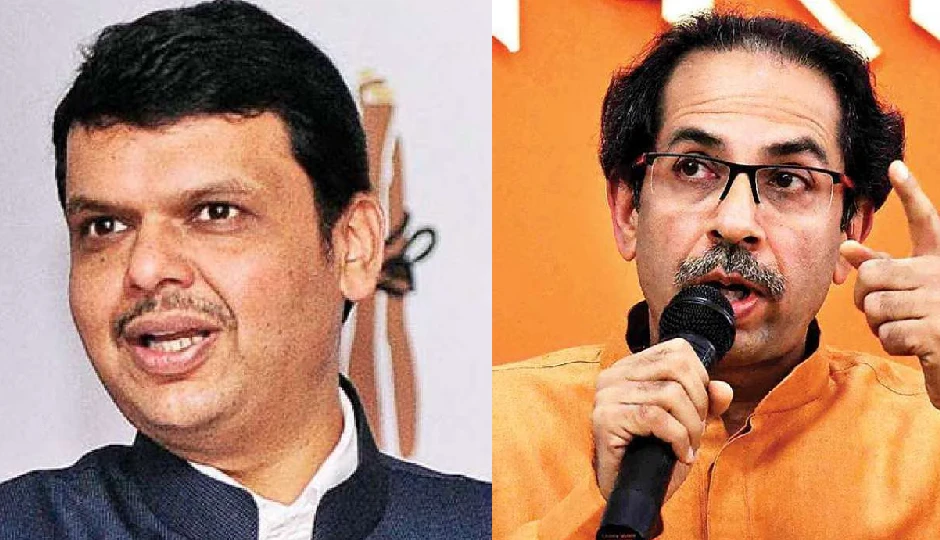
As preparations intensify for the upcoming Brihanmumbai Municipal Corporation (BMC) elections, Mumbai has once again become the focal point of a sharp political argument over development. The city, widely regarded as India’s financial nerve centre, is seeing its infrastructure record used as a central campaign plank. Leaders and supporters of the ruling Mahayuti alliance claim that large-scale projects gain momentum under Devendra Fadnavis-led administrations, while opponents accuse the Mahavikas Aghadi (MVA) of slowing or halting key initiatives during its time in power. With civic polls approaching, Mumbai’s growth story has turned into a potent political tool for both camps.
The debate over Mumbai’s development trajectory is not new, but it has regained intensity in recent months. Mahayuti supporters frequently point to visible infrastructure progress, while critics of the MVA highlight delays and reversals, particularly surrounding the Metro 3 car shed controversy and the handling of welfare measures during the lockdown period. Each side presents a contrasting version of the same timeline, framing the city’s past and future through sharply different lenses.
Leaders aligned with the Mahayuti argue that their governance restores the spirit of “dhavanari Mumbai”—a city defined by speed, ambition and efficiency. According to them, delays in road construction, Metro corridors and connectivity projects directly impact crores of daily commuters and businesses that depend on seamless movement. They contend that many interruptions were not the result of technical, environmental or financial hurdles, but stemmed from political rivalry and a lack of continuity in decision-making.
Mahayuti vs MVA: Competing Claims on Mumbai’s Growth
Between 2014 and 2019, when Devendra Fadnavis served as Chief Minister, several long-pending infrastructure proposals reportedly moved beyond paperwork and into execution. Projects that had remained stalled for years received clearances, Metro networks expanded, planning for the coastal road advanced and work commenced on the Mumbai Trans Harbour Link, later inaugurated as Atal Setu. Supporters describe this phase as one of the most assertive infrastructure drives Mumbai has witnessed in recent decades.
Those who back the Fadnavis administration argue that faster approvals and decisive governance helped articulate a long-term vision for transport and urban connectivity. They claim the contrast became apparent when political leadership changed, pointing to altered deadlines and revised plans for tunnels, bridges and the underground Metro 3 corridor as evidence of slowed momentum.
The Uddhav Thackeray Phase Under Scrutiny
Critics of the 2019–2022 Mahavikas Aghadi government led by Uddhav Thackeray allege that the pace of development weakened during this period. They characterise the coalition as being more focused on power-sharing dynamics than on project execution, arguing that infrastructure slipped down the list of priorities amid internal coordination challenges.
The Metro 3 car shed issue at Aarey became the most visible flashpoint of this debate. Opponents claim that the decision to halt work at the earlier site was politically driven and aimed at denying credit to the previous administration. According to them, the move resulted in cost escalations estimated at nearly ₹10,000 crore and delayed critical east–west connectivity for several years.
Welfare Policies, Lockdown and Allegations
Rival parties also allege that several welfare-linked and infrastructure programmes received diminished attention during the MVA tenure. Initiatives such as Jalyukt Shivar and Metro expansion plans are cited as examples. As Mumbai residents dealt with potholes, congestion and extended commute times, critics argue that decisions emanating from Matoshree disproportionately affected projects associated with Devendra Fadnavis.
The COVID-19 lockdown period intensified political criticism. With Mumbai under immense strain in healthcare, employment and transport, opponents accused leaders from the Uddhav Thackeray camp and allied groups of mismanagement and corruption. Allegations surrounding food supply contracts and procurement during the pandemic further deepened political fault lines, with critics asserting that leadership priorities appeared disconnected from the everyday hardships faced by citizens.
Momentum After the 2022 Political Shift
Following the change in government in 2022, with Eknath Shinde assuming office as Chief Minister and Devendra Fadnavis as Deputy Chief Minister, Mahayuti supporters claim that stalled projects were swiftly revived. They often cite the opening of Atal Setu—hailed as the country’s longest sea bridge—as a symbol of renewed administrative urgency and intent.
Several other projects also regained traction. The coastal road has significantly cut travel time between south Mumbai and Worli, while the Mumbai–Ahmedabad bullet train project, once criticised as impractical, is now progressing at a faster pace. New Metro routes have begun operations, gradually reshaping daily commuting patterns and altering the city’s transport landscape.
High Political Stakes Ahead
The return of a Mahayuti-led government in the 2024 Assembly elections under Devendra Fadnavis has strengthened claims of continuity in development across Maharashtra, including Mumbai. Yet the battle for control of the Brihanmumbai Municipal Corporation remains fiercely contested, with parties associated with the earlier Mahavikas Aghadi eager to reclaim civic power.
Critics caution that a return to what they describe as a “speedbreaker” approach could once again slow down civic works. They warn that ego-driven politics and decision-making influenced by percentage calculations may push Mumbai backward in terms of infrastructure and essential services. On the other hand, proponents of uninterrupted governance argue that the city cannot afford further pauses or policy reversals.
As Mumbai stands at yet another political crossroads, the question dominating public discourse is whether the city will continue on a path of gatiman vikas—fast-paced development—or risk slipping back into a phase defined by delays, uncertainty and stalled projects.