Vishu 2026- Significance Of Elements In Vishukkani
By: Priyanka Maheshwari Wed, 15 Apr 2026 11:10:02
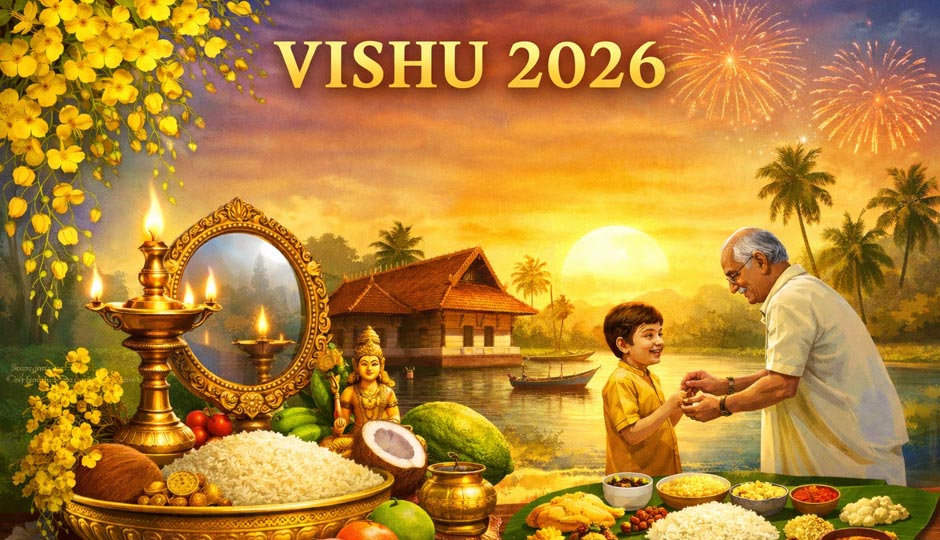
On Vishu morning in Kerala, the day traditionally begins with what one sees first after waking. In many homes—especially older households—elders gently guide family members to view the Vishukkani so it becomes their first sight of the new year. This custom reflects a long-held belief that the first visual impression of Vishu carries symbolic importance, shaping the tone for the year ahead.
Vishukkani Timing: What Tradition Follows
The Vishukkani is viewed immediately upon waking on Vishu morning, before looking at anything else. Cultural references place this moment in the early dawn hours, often associated with Brahma Muhurta. In most Kerala households, this typically falls between 4:00 AM and 6:00 AM, depending on when the day begins.
Vishu 2026: Meaning Behind the Symbolic Elements of the Vishukkani
The Vishukkani is arranged the night before and placed in a prayer room or a designated sacred space in the home. It is set up so it can be seen instantly upon waking, without distraction. The idea is simple: to begin the year by viewing objects linked with prosperity, light, and stability.
Each element in the Vishukkani is thoughtfully chosen. Together, they represent abundance, nourishment, wealth, and spiritual grounding—forming a meaningful visual composition that marks the start of Vishu 2026.
The Mirror: Self-Reflection at the Centre
A mirror, often the traditional ‘Aranmula Kannadi,’ holds a central place in the arrangement. Its meaning goes beyond physical reflection.
It symbolizes self-awareness—the idea that the first sight of the year includes not just external abundance, but also one’s own presence within it. The mirror draws attention inward, suggesting that perspective shapes experience.
In many interpretations, it highlights a simple truth: prosperity is not only external, but also influenced by how one perceives life.
Kanikonna Flowers: Seasonal Prosperity
The bright yellow Kanikonna flowers, which bloom around Vishu, are closely tied to the festival. They signify seasonal renewal and natural abundance.
Their yellow colour is associated with positivity and prosperity, serving as a reminder of growth and continuity. Their presence also connects the celebration to Kerala’s agricultural rhythms.
Rice or Grains: Food Security
Rice or paddy grains often form the base of the Vishukkani. This placement carries deep symbolic meaning.
They represent food security, stability, and the assurance of sustenance for the coming year. As a staple crop in Kerala, rice reflects survival and continuity, grounding the entire arrangement.
Coconut and Fruits: Wholeness and Abundance
Coconut, often placed whole or split, symbolizes completeness and purity. It reflects the idea of inner richness and self-sufficiency.
Seasonal fruits and vegetables—such as mangoes, jackfruit, and cucumbers—represent agricultural prosperity. Together, they express hopes for nourishment, growth, and a fruitful year.
Coins and Wealth Symbols
Coins, gold, or jewellery placed in the Vishukkani represent material prosperity. Their meaning is direct—they signify financial stability and well-being for the year ahead.
They also balance the arrangement by highlighting that prosperity includes both material and spiritual aspects.
The Nilavilakku: Light and Direction
The traditional oil lamp, or Nilavilakku, plays a vital role in the Vishukkani. It symbolizes light, clarity, and the removal of darkness.
Its steady flame represents guidance and divine presence, helping set a calm and focused tone for the day.
Krishna or Sacred Presence
Many Vishukkani setups include an idol of Lord Krishna or Vishnu, or a sacred text placed at the centre.
This element represents spiritual grounding, bringing a sense of order, values, and protection. It serves as a reminder that true prosperity is meaningful when guided by ethics and discipline.
The Uruli: Holding It All Together
The uruli, a traditional metal vessel, serves as the base that holds the entire arrangement. While not symbolic in itself, it plays an essential structural role.
It brings all the elements together into one unified display, reflecting completeness—everything meaningful gathered in a single, purposeful frame.
Vishukkani is more than a ritual—it is a carefully composed visual philosophy that shapes how Vishu 2026 begins in many Kerala households. Each element, from the mirror to the grains, flowers, and lamp, carries layered meaning tied to perception, stability, and renewal.