- Home›
- Healthy Living›
- 9 Yoga Asanas For Back Pain
9 Yoga Asanas For Back Pain
By: Priyanka Maheshwari Thu, 03 Sep 2026 10:58:21
Back pain has become a common problem in today’s fast-paced lifestyle, often caused by prolonged sitting, poor posture, lack of physical activity, stress, or muscle stiffness. While rest may provide temporary relief, regularly practicing gentle yoga can help improve flexibility, strengthen the muscles that support the spine, and promote better posture and body alignment.
Yoga combines controlled movements, stretching, strengthening exercises, and mindful breathing, making it a useful addition to a healthy routine for managing certain types of back pain. Specific asanas can gently stretch the lower back, hips, and hamstrings while strengthening the core and back muscles. When practiced correctly and consistently, these poses may help reduce stiffness, improve mobility, and make everyday movements more comfortable.
From Cat-Cow Pose and Child’s Pose to Bhujangasana, Setu Bandhasana, and Bird Dog, several yoga poses can be incorporated into a gentle back-care routine. However, every type of back pain is different, and yoga should never be forced through pain. People with severe, persistent, or unexplained back pain should consult a healthcare professional before beginning an exercise or yoga program.
1. Cat–Cow Pose (Marjaryasana–Bitilasana)
This is one of the best gentle movements for warming up the spine and improving flexibility.
How to do it:
Come onto your hands and knees.
Keep your wrists under your shoulders and knees under your hips.
Inhale and slowly drop your belly toward the floor while lifting your chest and tailbone.
Exhale and round your spine toward the ceiling, gently tucking your chin.
Move slowly between the two positions.
Repeat 8–10 times.
Benefits:
Improves spinal mobility
Relieves stiffness
Gently stretches the back and neck
Helps loosen tight muscles
Tip: Don't force your spine into a deep arch or round.
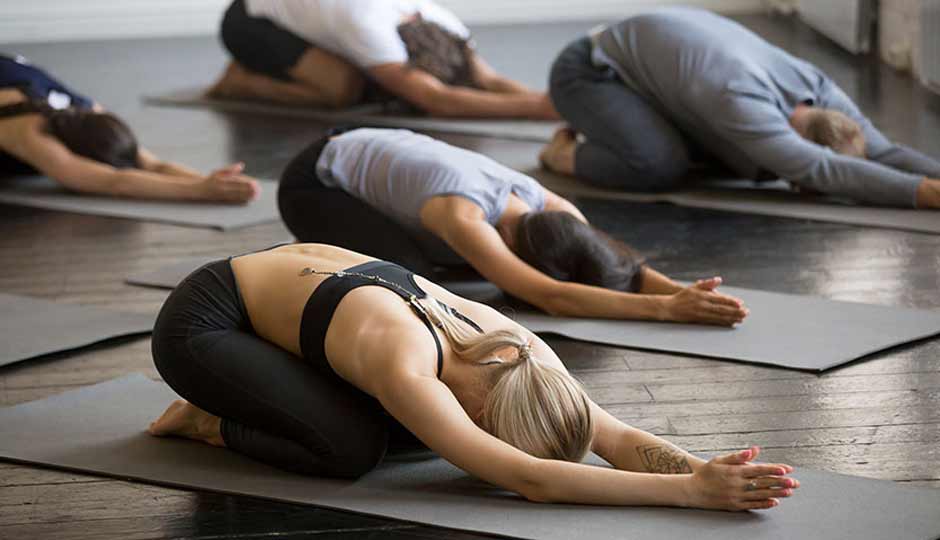
2. Child's Pose (Balasana)
Child's Pose is a restorative posture that can gently stretch the lower back.
How to do it:
Kneel on the floor with your knees comfortable apart.
Sit your hips back toward your heels.
Slowly fold your upper body forward.
Extend your arms in front of you or keep them beside your body.
Rest your forehead on the floor or a cushion.
Breathe slowly for 20–40 seconds.
Repeat 2–3 times.
Benefits:
Gently stretches the lower back
Releases tension around the hips
Encourages relaxation
Can reduce stiffness after prolonged sitting
Modification: Place a pillow under your chest if reaching the floor is uncomfortable.
3. Bhujangasana (Cobra Pose)
Cobra Pose can help strengthen the back muscles and improve spinal extension, but it should be performed gently.
How to do it:
Lie on your stomach.
Keep your legs extended behind you.
Place your palms beside your chest.
Keep your elbows close to your body.
Inhale and gently lift your chest using your back muscles.
Keep your pelvis and lower ribs relatively relaxed toward the floor.
Don't straighten your elbows completely.
Hold for 10–20 seconds.
Repeat 3–5 times.
Benefits:
Strengthens spinal extensor muscles
Opens the front of the body
Improves spinal mobility
May help counteract prolonged sitting
Important: If bending backward makes your pain worse, skip this pose.
4. Pelvic Tilts
This gentle exercise is particularly useful for developing awareness and control of the lower back and pelvis.
How to do it:
Lie on your back with knees bent.
Keep your feet flat on the floor.
Let your arms rest beside your body.
Gently tighten your abdominal muscles.
Flatten your lower back toward the floor by slightly tilting your pelvis.
Hold for 3–5 seconds.
Relax.
Repeat 10–15 times.
Benefits:
Activates abdominal muscles
Improves pelvic control
Gently mobilizes the lower back
Can help build a foundation for strengthening exercises
5. Sphinx Pose
Sphinx Pose is a gentler alternative to a deep Cobra Pose.
How to do it:
Lie on your stomach.
Place your elbows underneath or slightly in front of your shoulders.
Keep your forearms on the floor.
Gently lift your chest.
Keep your shoulders away from your ears.
Hold for 15–30 seconds.
Repeat 2–3 times.
Benefits:
Gently strengthens the back
Encourages spinal extension
Opens the chest and abdomen
Less demanding than a full Cobra
6. Supine Knee-to-Chest Stretch
This is a simple stretch that can help release tension around the lower back and hips.
How to do it:
Lie comfortably on your back.
Bend one knee.
Slowly bring it toward your chest.
Hold behind the thigh rather than pulling aggressively on the knee.
Hold for 15–30 seconds.
Release and switch sides.
Repeat 2–3 times per side.
Tip: Keep the opposite leg bent if keeping it straight makes your lower back uncomfortable.
7. Bridge Pose (Setu Bandhasana)
Bridge Pose helps strengthen the glutes, hips and posterior chain, which can support the lower back.
How to do it:
Lie on your back.
Bend your knees and place your feet hip-width apart.
Keep your feet approximately underneath your knees.
Place your arms beside your body.
Tighten your abdominal and glute muscles gently.
Slowly lift your hips.
Keep your knees pointing forward.
Hold for 5–10 seconds.
Slowly lower down.
Repeat 8–10 times.
Avoid: Overarching your lower back or pushing into pain.
8. Supine Spinal Twist
This can gently mobilize the spine and stretch the hips.
How to do it:
Lie on your back with your knees bent.
Bring both knees toward your chest.
Slowly lower your knees toward one side.
Keep your shoulders relaxed on the floor.
Turn your head only if comfortable.
Hold for 15–30 seconds.
Return to the centre and repeat on the other side.
Important: Don't force the knees toward the floor.
9. Bird Dog (Dandayamana Bharmanasana)
Bird Dog is excellent for developing core stability and back control.
How to do it:
Start on your hands and knees.
Tighten your abdomen gently.
Extend your right leg backward.
When balanced, extend your left arm forward.
Keep your hips level and your spine neutral.
Hold for 5–10 seconds.
Return slowly.
Repeat on the opposite side.
Perform 6–10 repetitions per side.
Tip: Start by moving only one limb at a time if you find the full movement difficult.