
- Home›
- Healthy Living›
- PCOS Renamed To PMOS- What Has Changed
PCOS Renamed To PMOS- What Has Changed
By: Priyanka Maheshwari Thu, 21 May 2026 10:07:38
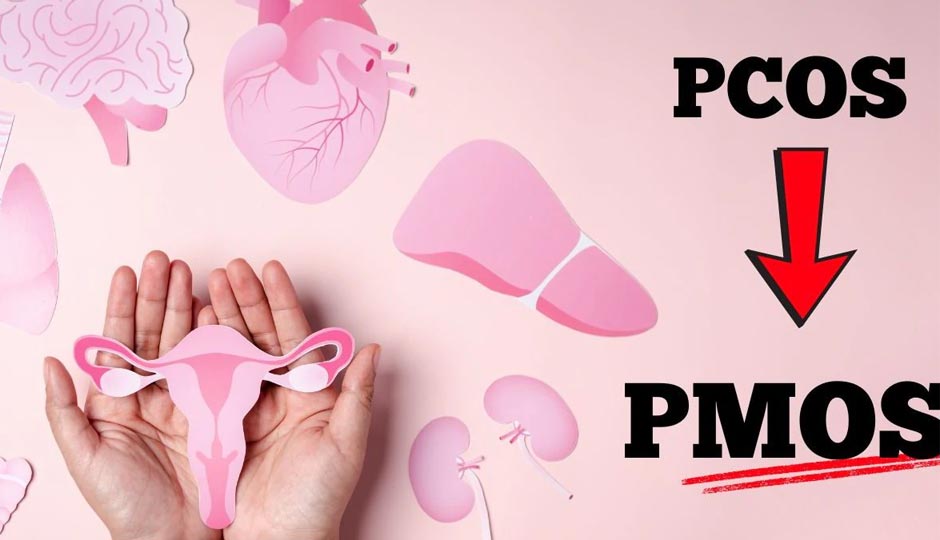
For many years, women were diagnosed with polycystic ovary syndrome (PCOS), a term that placed emphasis on the ovaries and the presence of cysts as the defining characteristic of the condition. However, a large number of patients never actually had ovarian cysts. Instead, they were dealing with a far more complex hormonal and metabolic disorder that the name did not accurately represent.
That has now officially been updated.
What has changed
On May 12, 2026, during the European Congress of Endocrinology in Prague, specialists announced that polycystic ovary syndrome will be renamed polyendocrine metabolic ovarian syndrome (PMOS). As reported in The Lancet, this decision was shaped by extensive consultation involving tens of thousands of responses from patients and healthcare professionals, coordinated across 56 academic, clinical, and patient organisations.
The new terminology reflects a broader understanding of the condition as a multisystem disorder, rather than one limited to reproductive health. It involves interconnected effects on endocrine, metabolic, reproductive, dermatological, and psychological functions.
Why the old name was reconsidered
The term PCOS was widely seen as misleading. While it suggested a condition centred on ovarian cysts, many individuals diagnosed with it do not have cysts at all. This narrow framing contributed to misunderstanding of the disorder and, in some cases, delayed or incomplete treatment.
Affecting an estimated 170 million women worldwide—more than one in eight—the condition was often oversimplified in public and clinical perception. This led to gaps in diagnosis, fragmented care, and limited awareness of associated risks such as metabolic and cardiovascular complications.
Over time, medical experts increasingly recognised that the name did not capture the full scope of the condition and could contribute to stigma and confusion.
The consultation process
The renaming effort was not abrupt. It followed more than a decade of research, surveys, and stakeholder engagement. Building on earlier studies from 2017 and 2023, a large-scale survey led by Professor Helena Teede at Monash University was conducted in 2025, reaching nearly 15,000 participants.
In total, around 22,000 voices—including patients, clinicians, researchers, and advocacy groups—contributed feedback on a potential new name. The most commonly expressed priorities were reducing stigma, improving clarity, and ensuring scientific accuracy. Many participants also emphasised the importance of highlighting the endocrine and metabolic nature of the condition.
What PMOS represents
The term polyendocrine metabolic ovarian syndrome (PMOS) is intended to better describe the condition’s complexity. It reflects hormonal irregularities affecting multiple systems, along with significant metabolic impacts such as insulin resistance, weight changes, cardiovascular risk, skin-related symptoms, and reproductive effects.
Each part of the name carries specific meaning:
Polyendocrine highlights involvement of multiple hormonal systems
Metabolic reflects insulin resistance and related health risks
Ovarian maintains the link to reproductive function
Syndrome indicates a cluster of related symptoms rather than a single disease
What happens next
Although the name has officially changed, implementation will take time. Over the next three years, PMOS will gradually be incorporated into clinical guidelines, medical classification systems, and healthcare training programs worldwide.
Awareness campaigns are also planned to help healthcare professionals, policymakers, and the public adapt to the new terminology. Digital tools such as patient support apps will be updated to reflect the change.
Full adoption is expected in the 2028 international guideline update, with the goal of improving diagnostic accuracy, reducing stigma, and aligning medical terminology more closely with current scientific understanding.