Hariyali Teej 2026- Date, Muhurat And Puja Vidhi Explained
By: Priyanka Maheshwari Sat, 08 Aug 2026 11:36:30
Somewhere between the first rumble of thunder in Shravan and the first tender green shoot emerging from rain-soaked soil, a festival seems to come alive. This year, that beautiful moment falls on Saturday, 15 August 2026, sharing its date with a national occasion far greater than any single household celebration.
Hariyali Teej 2026 holds a unique significance this year as it coincides with the Tritiya Tithi of Shravana and India's Independence Day. For millions of women across North India who celebrate Teej with devotion and enthusiasm, this rare overlap adds another dimension to a festival already deeply associated with faith, greenery, marital bliss, and the arrival of the monsoon.
When Is Hariyali Teej 2026?
The Tritiya Tithi begins at 6:46 pm on 14 August 2026 and concludes at 5:28 pm on 15 August 2026. Since Hindu festivals are generally observed according to the Udaya Tithi, or the lunar date prevailing at sunrise, Hariyali Teej will be celebrated on Saturday, 15 August 2026.
The most auspicious period for performing the puja begins after sunrise and continues during the day until the Tritiya Tithi ends in the evening. However, devotees should refer to their local Panchang for precise timings, as sunrise and sunset can vary slightly from one city to another.
Why Is Hariyali Teej Celebrated?
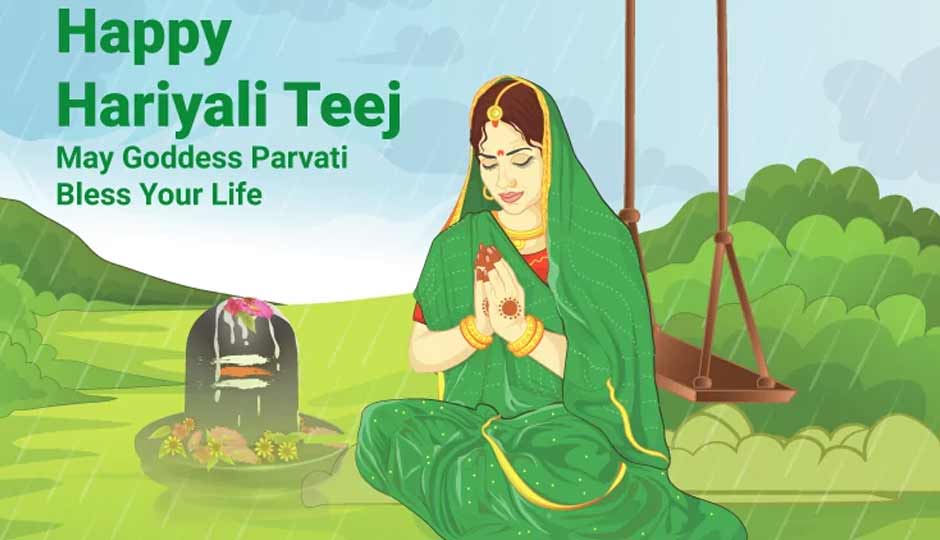
Hariyali Teej celebrates the divine union of Goddess Parvati and Lord Shiva. Traditionally, married women observe the festival and undertake a fast while praying for the long life, health, happiness, and prosperity of their husbands.
The festival commemorates Goddess Parvati's unwavering devotion and years of penance to attain Lord Shiva as her husband. The word "Hariyali" means greenery, beautifully reflecting the lush landscapes that appear across India during the monsoon season. Green, therefore, becomes the defining colour of Teej and is traditionally associated with fertility, prosperity, happiness, and marital harmony.
The Katha: A Story Spanning 108 Lifetimes
According to Hindu tradition, Hariyali Teej is associated with the belief that Goddess Parvati was reborn 108 times before finally being accepted by Lord Shiva as his wife.
In one of her previous incarnations, Parvati was known as Sati. Her journey of devotion and penance continued across lifetimes, reflecting her unwavering determination to unite with Lord Shiva. Eventually, her deep devotion and perseverance won his acceptance.
Beyond its mythology, the story carries a timeless message about faith, patience, determination, and staying committed to what one truly believes in, even when the path is difficult.
Rituals: Fasting, Mehendi and the Jhula
Hariyali Teej is celebrated with a beautiful combination of fasting, prayers, traditional adornment, music, and family gatherings.
Many women observe a nirjala vrat, traditionally abstaining from both food and water throughout the day. Devotees worship Lord Shiva and Goddess Parvati, listen to or recite the Teej Vrat Katha, and seek blessings for marital happiness and prosperity.
A traditional Teej puja may include preparing a small altar, offering flowers, fruits, sweets, and other sacred items to the deities. Women also adorn their hands with intricate mehendi designs, wear vibrant green outfits and jewellery, and participate in prayers with family members. The fast is traditionally concluded after the puja and offering of prasad.
Another much-loved tradition is the jhula, or decorated swing. Swings adorned with flowers are placed in courtyards, gardens, and community spaces, where women gather to swing, sing traditional Teej songs, and celebrate the festive spirit.
How Different States Celebrate Hariyali Teej
The traditions surrounding Hariyali Teej vary beautifully from one region to another.
In Rajasthan, the festival is celebrated on a grand scale with colourful processions, fairs, traditional music, and elaborate decorations. Women dress in vibrant traditional attire and participate in rituals celebrating Teej Mata.
In Uttar Pradesh and Bihar, the festival is often observed through household puja, fasting, traditional songs, mehendi, and family celebrations.
Jaipur, in particular, is renowned for its spectacular Teej procession. The idol of Teej Mata is carried through the historic streets of the old city in a beautifully decorated procession accompanied by traditional performers, dancers, musicians, and decorated elephants. The entire celebration transforms the city into a vibrant expression of Rajasthan's cultural heritage.
The festival is also known by different names and carries distinct regional traditions. In Punjab, it is popularly associated with Teeyan, while in Rajasthan, celebrations are closely linked with Shringara Teej. Despite these regional differences, the essence remains the same: devotion, celebration, greenery, womanhood, and the joyful arrival of the monsoon.